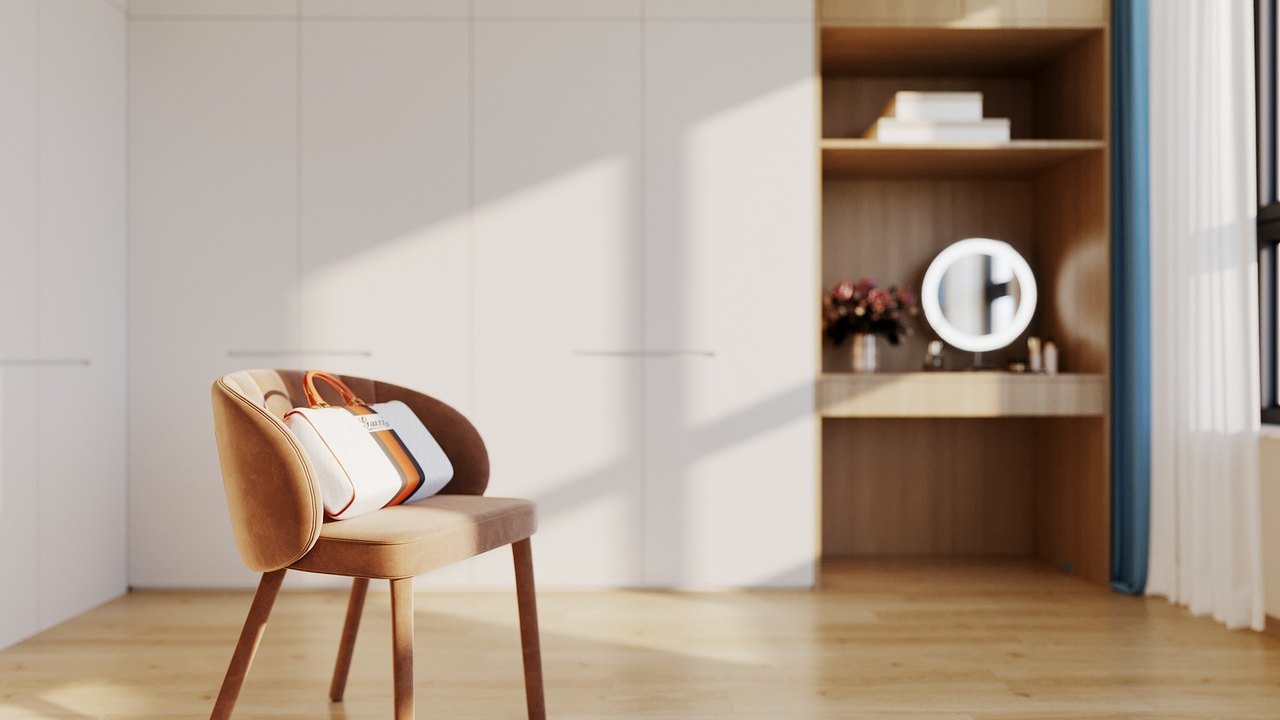
There is a chair in every home that everyone gravitates to, and it is rarely the most expensive one. It is the one where the seat is at the right height, the back leans at the right angle, and the arms are where your arms go. The other chairs in the room are, functionally, shelves with legs.
This is not a failure of taste. It is what happens when a room is furnished by buying chairs in a set rather than by working out how many hours a day each one has to hold a person.
Count the hours, then buy
Take a normal week and count the hours you spend sitting in each position in your home. For most people it comes out roughly like this: eight hours a week at a desk, six at a dining table, four in a living-room chair, and about twenty minutes in every other chair in the house combined.
That ratio is the entire buying brief. The desk chair and the dining chair are the two that carry real hours, and they are the two people most often buy on looks. The lounge chair is third. Everything else is a chair for guests, for a bag, for the minute before you leave.
So the rule: one chair per room gets bought properly, and the rest get bought honestly. A folding chair that admits it is a folding chair is a better object than an upholstered chair that pretends to be comfortable and is not.
The three measurements that matter
Seat height. Floor to the top of the seat, where your thigh rests. Dining chairs sit at 42–45cm; lounge chairs at 38–42cm. Below 38cm and most adults are getting up out of a hole; above 46cm and your feet stop reaching the floor, which is why bar stools are a different category of furniture and not a tall dining chair.
Seat depth. Front edge to backrest, 40–44cm for a dining chair. This is the measurement people ignore and then blame their back for. If the seat is deeper than your thigh is long, you slide forward to keep your feet down and end up perched with no back support. A shallow seat with a straight back is more comfortable than a deep seat with a soft one.
Seat-to-table clearance. A standard dining table is 74cm high. You need 27–30cm between the seat and the underside of the tabletop, and that includes the apron and any drawer. Chairs with tall arms often do not fit under the table at all, which means they live pulled out, which means the room loses 30cm of floor to a chair nobody is sitting in.
Where the money should go
Not into upholstery. Foam is the first thing to fail and the cheapest thing to replace. A chair with a sagging seat is not a bad chair; it is a chair with a £40 problem.
Money should go into three places. The joints, because a chair fails at the joint before anywhere else. Mortise and tenon, properly glued, outlasts screws and dowels by decades — and it can be re-glued, which is the real point. The frame material, because a chair is a lever and the load at the joint is several times your weight. Solid ash or oak, or steel. The finish, because a chair takes more abrasion than any other object in the house; an oil finish can be refreshed with a rag, a lacquer cannot.
The test in a shop takes ten seconds. Put one hand on the top of the back and one on a front leg and push diagonally, both ways. A good chair moves as one piece. A bad one creaks and flexes at the corner, and it will keep doing that until the glue gives.
What a repaired chair tells you
Look at any chair more than fifty years old and you will find a repair: a re-glued joint, a re-caned seat, a replaced splat. That is not a sign of poor quality. It is the definition of it — the chair was worth fixing.
A chair that cannot be repaired is a chair with a lifespan measured in years, no matter what it cost. Before buying, ask one question: if this seat wore through, could anyone replace it? If the answer is no because the frame and the upholstery are one moulded unit, you are buying a disposable object at a non-disposable price.
The forty minutes a chair needs every few years
Chairs fail slowly and predictably, and almost every failure starts small enough to fix with a mallet.
Joints loosen. Once a year, turn every chair over and tap each joint gently — a loose mortise makes a dull thud rather than a solid one. A joint caught early needs a squirt of glue and a clamp for an hour. A joint caught late needs the chair taken apart, which is a real job and often a decision to replace.
Feet wear. The chair feet take the entire load of every sit, and on a wooden floor they are the first thing to go. Felt glides cost a few pounds, stick on in a minute, and save both the floor and the leg. Replace them yearly; a glide worn through to the nail is worse than none.
Oil dries out. A chair with an oil finish needs a coat every twelve to eighteen months on the parts hands touch — arms, the front of the seat rail, the back of the top rail. That is where skin oils and sunlight do their work. Twenty minutes with a rag keeps a chair looking like a chair rather than like garden furniture.
Webbing and foam sag. On an upholstered chair, sag begins at the front edge of the seat, because that is where everyone sits. A piece of plywood under the cushion — cut to size, slipped in — restores a sagging seat for nothing. It is not a repair. It is a legitimate fix that upholsterers use.
What to check on a secondhand chair
Half the good chairs in the world are in a charity shop or a listing at any moment, and they are the best value in furniture by a wide margin.
Look past the upholstery entirely — fabric is replaceable and foam is cheap. Look at the frame. Run a hand under the seat rails and feel for splits; tap the joints the same way you would in a shop; check that all four feet touch the floor when the chair is on a flat surface (if three do, the joint is dry or the leg is damaged, and the fourth leg will snap the first time someone leans back).
Then measure, because older chairs are often smaller than modern ones. A chair made before about 1960 usually has a seat height of 40–42cm rather than 45cm, and a seat depth of 38–40cm. For a dining chair at a modern table that can be too low, and a low dining chair is uncomfortable in a way you cannot fix. Look for 44cm or above, or accept it as a bedroom or hallway chair.
The arrangement
Two chairs facing each other, or at an angle, is a conversation. Four chairs in a row against a wall is a waiting room. If a room has four chairs, two of them should be positioned to be sat in and two should be positioned to be reached — near the table, near the door, near wherever the eighth person ends up.
And one chair should be somewhere slightly unexpected: turned toward the window, or into the corner where the light lands in the afternoon. The chair that gets used is almost never the one facing the television. It is the one that happens to be where the light is.