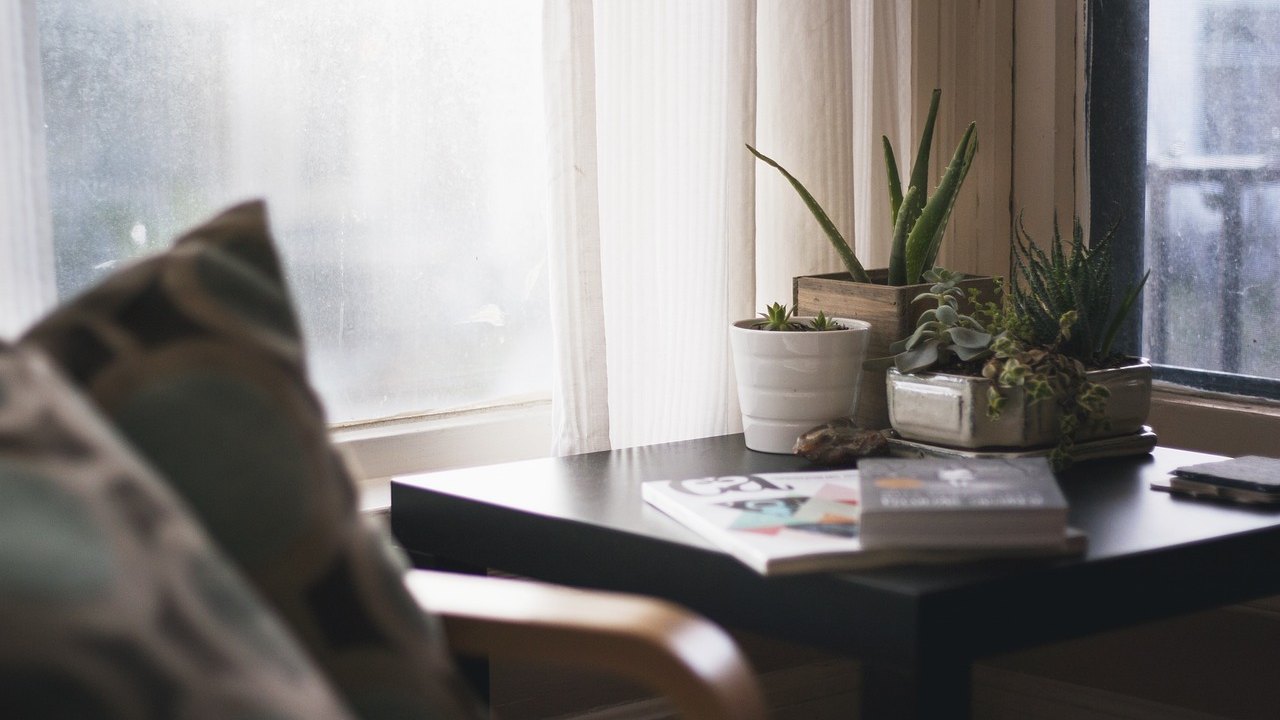
There is a chair in my flat that is in sun for about ninety minutes on a clear afternoon in November. I did not buy it. I moved it, four times, over two weekends, until it was in the right place. It is now the most used seat in the house and it cost nothing.
This is the least glamorous advice in interiors and the most reliable. Light is the largest single variable in how a room feels, it is free, and almost nobody arranges a room around it. People arrange around the television, the radiator, the door, and the socket. Then they buy a lamp to fix the result.
Find out where the light actually goes
Pick a Saturday when you will be home. Note where the sun lands at four points: mid-morning, noon, mid-afternoon, and an hour before sunset.
Two of those four will be positions you actually want to sit in. They will not be the same position, and they will not be where your furniture is.
This takes one day and it will tell you more about your room than any amount of looking at it. Most people have never done it, because they are at work during the only hours the room is at its best — which is precisely why the room feels wrong in the evening and nobody can say why.
The useful output is a sentence: the light is on the left wall at nine and on the floor by the window at three. That sentence is a furniture plan.
The four things that steal daylight
Curtains that overlap the glass. This is the biggest and most common. A curtain hung at the frame, or a pole that is exactly the window's width, means the open curtains cover 15–25cm of glass on each side. On a 120cm window that is roughly a third of the light, all day, every day. Fix: a pole 30–40cm wider than the window, brackets 10–15cm above the frame, so the open curtains stack clear.
Net curtains. They cut light by roughly half and they cut the view entirely. If privacy is the issue, a sheer linen that hangs inside the reveal does the same job with more light, or a film on the lower half of the glass.
Furniture in front of the window. A sofa back, a tall bookcase, a chest of drawers — anything above sill height within a metre of the glass blocks the bounce. The window does not just let light in; it lets it in at an angle, and that angle is what lights the ceiling and the back of the room.
Dark surfaces. A dark rug, a dark wall, dark upholstery: all absorb. A room can have a big window and still feel dim because everything in it eats the light. This is why pale rooms read as larger — not because pale is fashionable, because it reflects.
What to add, in order of return
A matte white ceiling. It is the largest surface in the room and it is the one nobody looks at. Matte white reflects around 85% of the light that reaches it, and light reaching the ceiling is what makes a room feel tall and evenly lit. Gloss reflects more in one direction and reads cheap; coloured ceilings absorb and lower the room.
A mirror facing a window. A mirror reflects what is in front of it. Facing a window, it reflects daylight and roughly doubles the perceived brightness of the wall it is on. Facing a dark wall, it doubles the darkness. This is the entire rule and it is violated in about half the rooms I have been in.
Something pale on the floor. A light rug or bare boards rather than a dark carpet. The floor is the second largest surface and it bounces light back up onto the ceiling, which is where you want it.
Fewer, bigger objects near the glass. A single plant on the sill is fine. A shelf of plants across the window is a curtain made of leaves.
How much window a room needs
There is a rough rule and it is worth knowing, because it tells you whether the room has a light problem or a layout problem.
Window area should be at least 10% of floor area, and 20% is comfortable. A 4×3m room is 12m², so it wants 1.2–2.4m² of glazing. A single window 1.2×1m is 1.2m² — the minimum, which is why so many rooms are technically compliant and still feel dim.
If the ratio is there and the room is still dark, it is a layout or surface problem and it can be fixed. If the ratio is not there, no amount of mirrors or white paint will get you there, and the answer is either a bigger opening — which is a building project — or accepting the room as an evening room and lighting it properly instead.
Orientation matters more than area. North light is steady, cool and indirect all day: the best light for a desk, a studio, anywhere colour accuracy matters, and the worst for warmth. South light is strong and moves across the room; it needs some way of being softened in summer or the room overheats. East gives you the morning only. West gives you a low, orange hour at the end of the day and nothing else — which, for a living room, is often exactly the right hour.
When daylight cannot be fixed
Some rooms genuinely cannot be improved, and it is worth recognising these rather than spending money on them.
A room facing a wall two metres away. A basement with a light well. A north-facing room on a low floor with a tree outside. In these, mirrors move darkness around rather than removing it, and a pale floor helps by a few per cent.
The honest answer is to stop treating it as a daylight room. Give it a warm colour on the wall rather than a cold white — a pale ochre or a warm neutral reads as sunlit where a cool white reads as grey under low light. Use lamps at three heights: one at 30cm, one at 110cm, one at 150cm, so the light comes from several directions and the eye stops reading the room as a lit box. And put the things you want to see near the lamp rather than near the window.
This is not a failure. A room that is warm and dim in the evening is doing something a bright room cannot, and most homes need one of each.
The seasonal part nobody plans for
The sun's noon altitude changes by about 47 degrees between midwinter and midsummer in northern Europe. That is a huge swing, and it means the light in a room in June and the light in the same room in December come from different angles and land in different places.
So a chair that is in sun in June may be in shadow in December, and the arrangement that worked in summer is wrong by November. The room has two layouts, and the honest thing is to accept it: move one chair and one small table twice a year, in line with the seasonal change you are already doing.
The thing to do this week
For one week, move one chair to wherever the light is at the hour you are actually home. Do not buy anything. Do not rehang the curtains yet.
If the room feels better, you have found the real layout and the rest of the furniture can follow it. If it does not, you have lost nothing but a week of slightly odd seating — and you have learned something about the room that no shop could have told you.