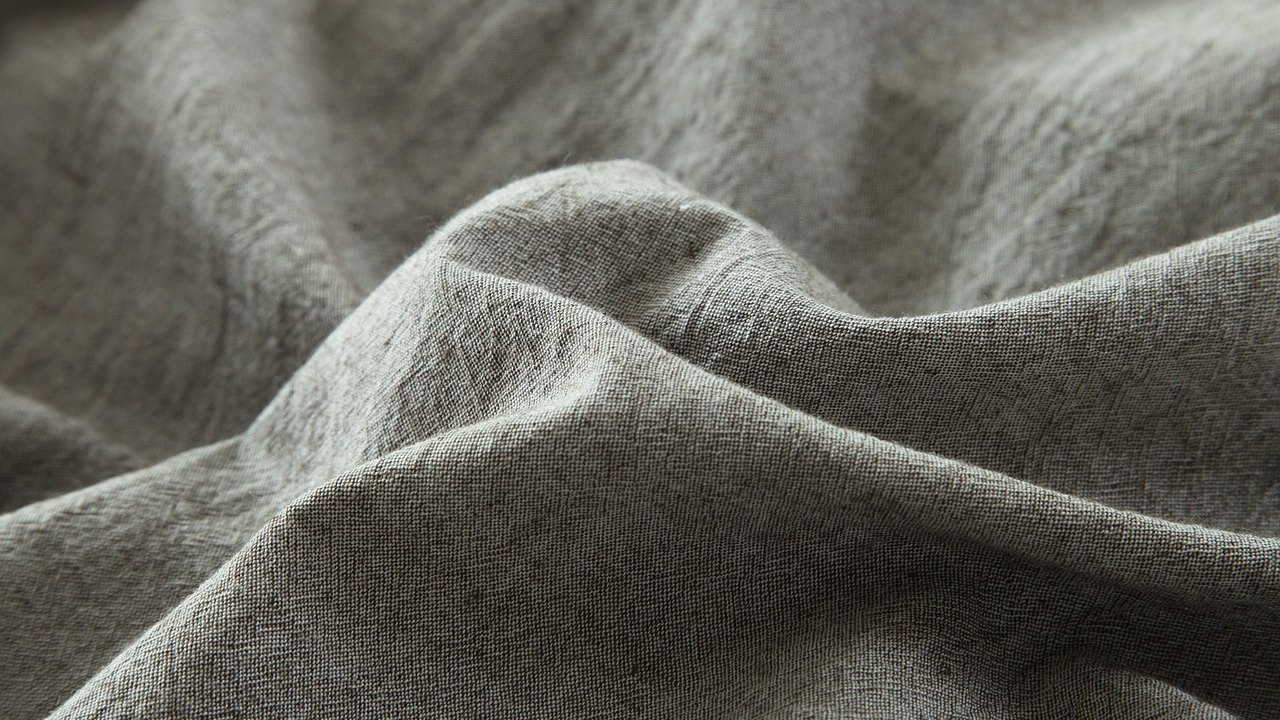
There is a kind of shop photograph where linen has been ironed into flat, glassy obedience, and every crease has been steamed out of existence. Those photographs have probably set back more linen purchases than they have made. People buy expecting one fabric and receive another — something softer, dimpled, folded like a bed that has been slept in and not yet made.
The fabric you receive is the honest one. Linen wrinkles because of what it is.
What the creases actually are
Linen comes from flax — the stem of a plant, not the boll, which is where cotton comes from. A flax fibre is long, stiff and irregular in thickness: it has a natural twist, a visible slub, and almost no elasticity. When you bend it, it stays softly bent rather than springing back the way cotton does. Bend it in the same place a few times — the fold line of a curtain, the place your knee goes in the night — and it keeps a memory of that bend.
So the crease is not damage. It is the fibre doing the only thing it knows how to do. A "wrinkle-resistant linen" is a fabric that has been resin-coated or blended with polyester until it stops behaving like linen — the textile equivalent of buying a dog and then asking it to be a cat.
This is also why linen ages so well in the ways that matter. The fibre's stiffness makes it one of the strongest common textiles, wet or dry; a linen sheet that is washed properly will outlast several cotton ones. It gets softer, drapier and more deeply textured with every wash, which is the opposite trajectory of most things sold to homes.
Choosing it: weight, weave, wash
Three numbers matter, and shops make them surprisingly hard to find.
Weight, in grams per square metre. For curtains, 220–260gsm gives the heavy, slightly rumpled drape you see in the magazines. Below 200gsm, linen curtains read thin and shift with every draught. For bedding, 160–170gsm is the sweet spot — enough body to drape, light enough to sleep under.
Whether it has been washed. Stonewashed or "washed" linen has been tumbled before it reaches you: the fibre is broken in, the texture is pre-set, and it arrives soft. Unwashed linen is crisper, holds structure better, and is the right choice for anything tailored — cushion covers, table runners, anything with a seam you want to stay put. Bedding should nearly always be washed-finish; curtains can go either way.
Where the flax came from. European flax — mostly France, Belgium and the Netherlands — is the standard the whole market measures against, and "European flax" is a certification you can check, not just a phrase. It does not guarantee quality, but its absence usually indicates a shorter, coarser fibre. If the listing says nothing at all about the fibre's origin, that silence is information.
One more thing the listing will not tell you: linen has almost no stretch, so seams and hems take stress directly. On curtains, look for a hem weighted with a folded double turn rather than a single. On bedding, check that the duvet corners are boxed rather than just folded and stitched — linen's refusal to stretch is exactly what makes a boxed corner hold a duvet in place.
How to tell it from a blend, in a shop
"Linen-look" and "linen blend" are the two phrases that cost people money, and both are legal. A 55% linen / 45% cotton blend is a perfectly good fabric — it wrinkles less and costs less — but it is not linen, and it will not soften the way linen softens.
Three tests, no equipment.
Squeeze it and let go. Pure linen creases sharply and stays creased. A blend with cotton springs back halfway; one with polyester springs back almost entirely. If it does not hold the crease, it is not linen.
Hold it to the light. Linen is slightly translucent and slightly uneven — you will see slubs, the thicker places in the yarn, and a gentle irregularity in the weave. A perfectly even, opaque surface is a blend or a very expensive mechanical linen.
Ask for the weight and the fibre content in writing. A seller who cannot give you gsm and a percentage is selling a look. That is not a crime, but you should know which transaction you are in.
Shrinkage, and what to buy because of it
Linen shrinks, typically 3–5% on the first wash, and it does so unevenly — more along the weft than the warp. This is not a defect; it is the fibre relaxing out of the tension it was woven under.
Two consequences worth planning for.
Buy curtains long. A 250cm panel at 4% shrinkage becomes 240cm, which is the difference between a hem that kisses the floor and one that floats. Order 5% longer than you need, wash before hemming if you are having them made, and hang them before deciding the final length.
Buy bedding to fit after washing, not before. A duvet cover sold as "260×220, may shrink slightly" will be 250×210 in three months, and a duvet that fit at purchase will bunch. Buy one size up, or buy from a maker who states a pre-shrunk, washed-finish measurement — which is one of the few real advantages of paying more.
Caring for it: the no-ironing guide
The care routine is shorter than the care-aisle industry would like you to believe.
Wash at 30–40°C with a mild detergent, and stop the spin early or skip it — the tumbling is what turns soft folds into hard creases. Shake the fabric out hard while it is damp. Hang curtains by their headers and leave them alone; the weight of the fabric is its own iron. Make the bed while the duvet cover is still barely damp and smooth it with a flat hand, once, from the centre outward.
Never bleach linen, never dry it bone-dry on a hot radiator — heat embrittles the fibre — and put the iron away unless you genuinely like ironing. The difference between "rumpled" and "wrinkled" is not the iron; it is whether you smoothed the fabric when it was damp. Ten seconds of attention at the moment of drying saves twenty minutes of pressing later, and preserves the texture in the first place.
The argument underneath
The honest case for linen is not that it is luxurious, though the good stuff is not cheap. It is that linen is one of very few common materials whose ageing improves both its performance and its appearance — softer, drapier, more evidently itself — while asking for less intervention every year. Almost everything else sold for the home works the other way around.
A fabric that records how it has been used, and looks better for it, is a strange thing to resent. The creases are not a flaw to be managed. They are the reason you chose it.