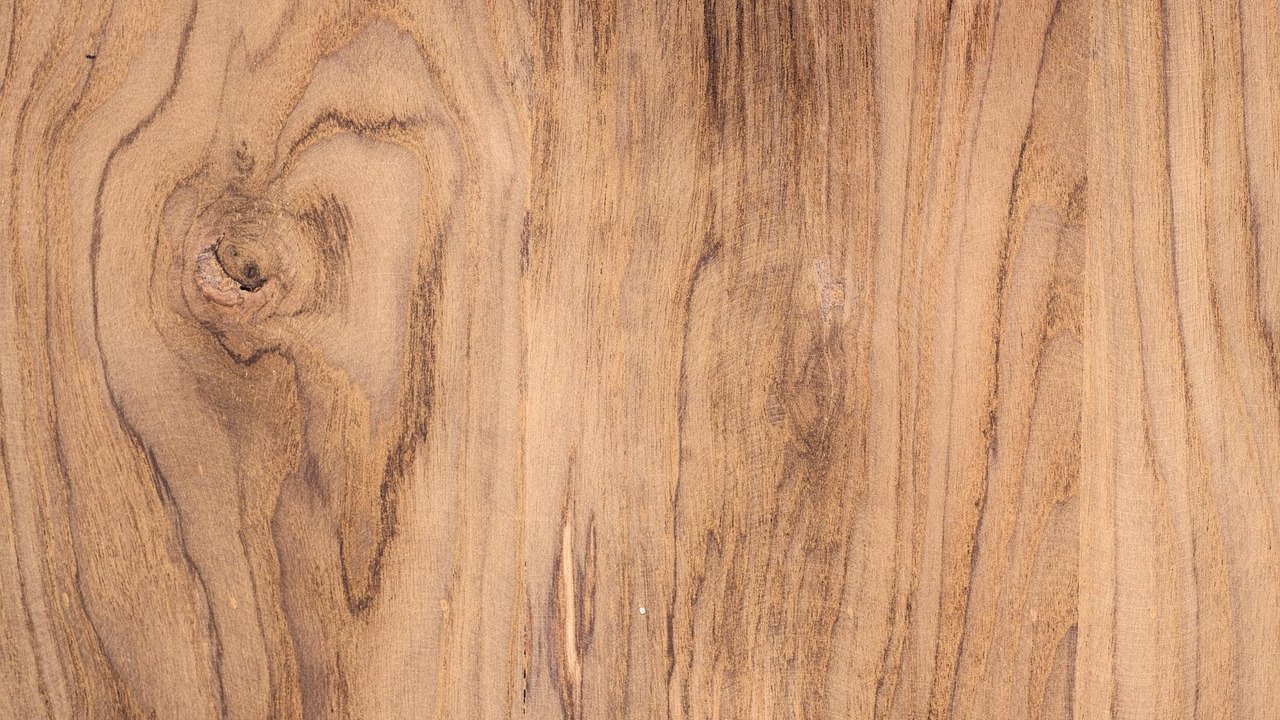
The three woods in the average furniture shop are oak, ash and pine, and the price difference between them is roughly one to one to a third. Shops present that as a ladder — pine is the cheap one, oak is the good one — and customers buy the top of the ladder they can afford.
That is the wrong model. These are three materials with different jobs, and the right question is not which is best but which job each piece of furniture is doing.
The one number that matters most
Hardness is measured on the Janka scale: the force needed to embed a steel ball halfway into the wood. White oak sits around 1,360, ash around 1,320, European oak a little lower at roughly 1,120, and pine anywhere from 380 for white pine to 870 for Scots pine.
Read that twice. Ash is within three per cent of white oak. The gap between oak and pine is a factor of two to three.
So the honest hierarchy is not oak, ash, pine. It is oak and ash, then a large gap, then pine. If a shop charges a premium for oak over ash, you are paying for grain, not for durability.
What each wood is actually good at
Oak has an open grain with visible rays and a high tannin content. It dents less than anything else at this price, it takes an oil finish beautifully, and it changes colour more than people expect — fresh oak is pale and slightly green, and eighteen months of daylight turns it honey, then it settles. If you buy oak furniture in two batches a year apart, the colours will not match. That is not a defect; it is a material with a memory.
Ash is the elastic one. It bends before it breaks, which is why it is the traditional wood for tool handles, axe shafts, ladders and baseball bats. In a chair, that elasticity is worth more than hardness: a chair takes shock loads, not steady ones, and a wood that gives slightly at the joint survives a dropped weight better than one that resists it. Ash also has a straighter, quieter grain than oak and stays paler, which is why it suits pale rooms and soap finishes.
Pine is soft, resinous and knotty. It dents with a fingernail, it exudes resin through paint on a hot day, and knots shrink and drop out over time. It is also cheap, light, easy to work, and completely honest about all of this. Pine is the right material for shelves, for painted furniture, for panelling, for anything where the load is light and the look is meant to be plain. It is the wrong material for a dining table you plan to keep, because a table takes twenty years of keys, plates and children.
The movement nobody warns you about
Wood is not dimensionally stable. It takes on and gives off moisture with the air, and it moves almost entirely across the grain — barely at all along it. In a heated home the swing is roughly 2–4mm across a metre of width between a humid July and a dry January.
This explains three things that look like faults and are not.
A tabletop is made of several narrow boards rather than one wide one, because many narrow boards move less in total than one wide one would. A drawer that slides perfectly in January swells and sticks in July. And a table with small gaps between its boards in winter is a table that was built by someone who understood the material.
The corollary: a tabletop fixed rigidly to a frame with screws in a straight line will split. Good furniture lets the top move — slotted brackets, buttons in a groove, or screws in oversized holes. If you are buying, it is worth turning the table over and looking.
Finish is a separate decision
Soap, oil, wax, lacquer, polyurethane. These are not quality levels; they are different contracts.
Soap is for oak and ash in pale rooms. It cleans, it leaves the wood matte and almost white, and it needs redoing every few months. It offers no protection against water rings at all.
Oil soaks in rather than sitting on top. It darkens the wood slightly, it can be spot-repaired with a rag and twenty minutes, and it needs re-oiling once or twice a year.
Hard wax oil is the practical middle. It penetrates and leaves a thin film, so it resists spills better than plain oil without the plastic look of lacquer.
Lacquer and polyurethane are films. They are the most protective and the least repairable — when a film chips at an edge, water gets under it and the damage spreads. On a table that will be used hard by people who do not care, a film is the correct choice. On a table you want to keep for thirty years, it is the wrong one, because in year twelve you will be sanding the whole top back.
The marks, and which ones come out
Every wooden table gets marked in its first year, and most of the marks are reversible if you know which is which.
A white water ring is moisture trapped in the finish, not in the wood. Put a dry cotton cloth over it and press with a warm iron on low for a few seconds at a time. The heat drives the moisture back out and the ring disappears. This works on lacquer and wax, and it does not work on a ring that has gone dark.
A dark ring is water that has reached the wood and started to stain or grow mould. It needs the finish taken back in that area and the stain bleached out — oxalic acid or a two-part wood bleach — before refinishing. It is a real job, and it is the reason a coaster is worth using.
A dent can be raised. Wood is cellulose, and it remembers its shape when it gets wet and hot. Cover the dent with a damp cloth, press with a hot iron, and the fibres swell back up. This is astonishing the first time it works and it works on every species — which is one of the quiet advantages of solid wood over veneer, where the same dent has crushed a 0.6mm skin onto a substrate and cannot be raised at all.
A scratch through an oil finish is nothing: sand with the grain, wipe, oil, done, and the repair is invisible because oil soaks in rather than sitting on top. The same scratch through lacquer is a visible line until the whole top is redone. This is the practical argument for oil, and it is why I would rather have a scratched oak table than a pristine lacquered one.
What to actually buy
Oak for the table and anything that takes knocks. Ash for chairs, stools and anything that flexes. Pine for shelves, painted pieces and things you have not decided to keep.
And one test that beats all of this: lift the piece. Solid oak at 180cm is heavy enough that you notice. A table that lifts easily at one end is a veneer on a manufactured core — which can be a perfectly good table, but it is not the thing the price tag is claiming.